
Keeping your own voice when AI writes for you
2026 · Voice and authorship · ChatGPT, Claude, Claude Code
In March 2024 I published a short post here about using AI to write. It ended with a line I still stand behind: “If you’re not shaping AI with your own truth, you’ll drown in a sea of plastic trash.”
It took me two more years to work out how to actually do that.
The drafts that didn’t sound like me
The pattern is easy to see in hindsight. I’d give an AI my idea, and it would hand back something polished, structured and confident. It sounded like nobody in particular.
- January 2025. A long report came back in formal executive language. I sent it back with three words: “in my tone”.
- July 2025. I asked for a post about how teams build shorthand over time. The draft opened with a backstory about how I got into FileMaker, one I’d never given it. It had invented my history to make the post flow. I replaced it with the real one: “I started as a print project manager, dreamed of sales… and some how landed into software system development”.
- September 2025. A post arguing that FileMaker is well placed for AI came back covered in rocket emojis and chess-versus-checkers framing. My follow-ups say it all: simplify it, make it easy to skim.
- Spring 2026. On an email, after two drafts padded with pleasantries: “Now let’s shorten it and get to the point… Let’s keep it to the facts.”
None of those drafts were wrong, exactly. They were generic. That’s worse for anything with my name on it.
From fixing drafts to writing rules
Correcting the same things over and over got old, so I started writing the corrections down. They became a voice guide that every AI I write with now reads before it drafts anything. It includes a list of constructions I’ve flagged as sounding like a machine:
- “Not because X, but because Y.”
- The “that’s not a people problem, that’s a systems problem” flip.
- Throat-clearing openers like “Here’s the thing”.
- One-line paragraphs stacked down the screen for drama.
- Emoji walls, hashtag stacks.
- Words like “unlock” and “leverage”.
The guide also has tests. Would I say this out loud to a peer at a Claris meetup or a print industry event? Does the first line earn the second? Would anyone save this, or just scroll past it?
The guide changed what I ask for, too. In August 2026, for a short post, I didn’t ask for better writing. I described the reaction I wanted: “And don’t make it too long as people won’t read…I just want to to stop, quickly read and walk away with something to think about.”
Too much “I”
The most recent correction came while rebuilding this website. The new home page draft said “I build” again and again. It was accurate in a narrow sense, and it felt wrong. The systems I’m proud of were built together with the people who run them. They know their business in ways I never will. My part was helping to build it.
So the home page now talks about what we could build. And the rule went into the voice guide, so every future draft starts from it: describe the work as shared, keep “I” for opinions and experience, and let the reader be the subject.
How it works now
My writing process with AI has settled into something simple:
- I bring the idea in my own words: a voice note, a ramble, a few rough lines.
- The AI drafts from the voice guide, not from its defaults.
- I quote the line I don’t like, and it replaces that line only. It doesn’t rewrite the whole thing back into its own style.
- When I paste my own edit, it checks for typos and leaves the voice alone.
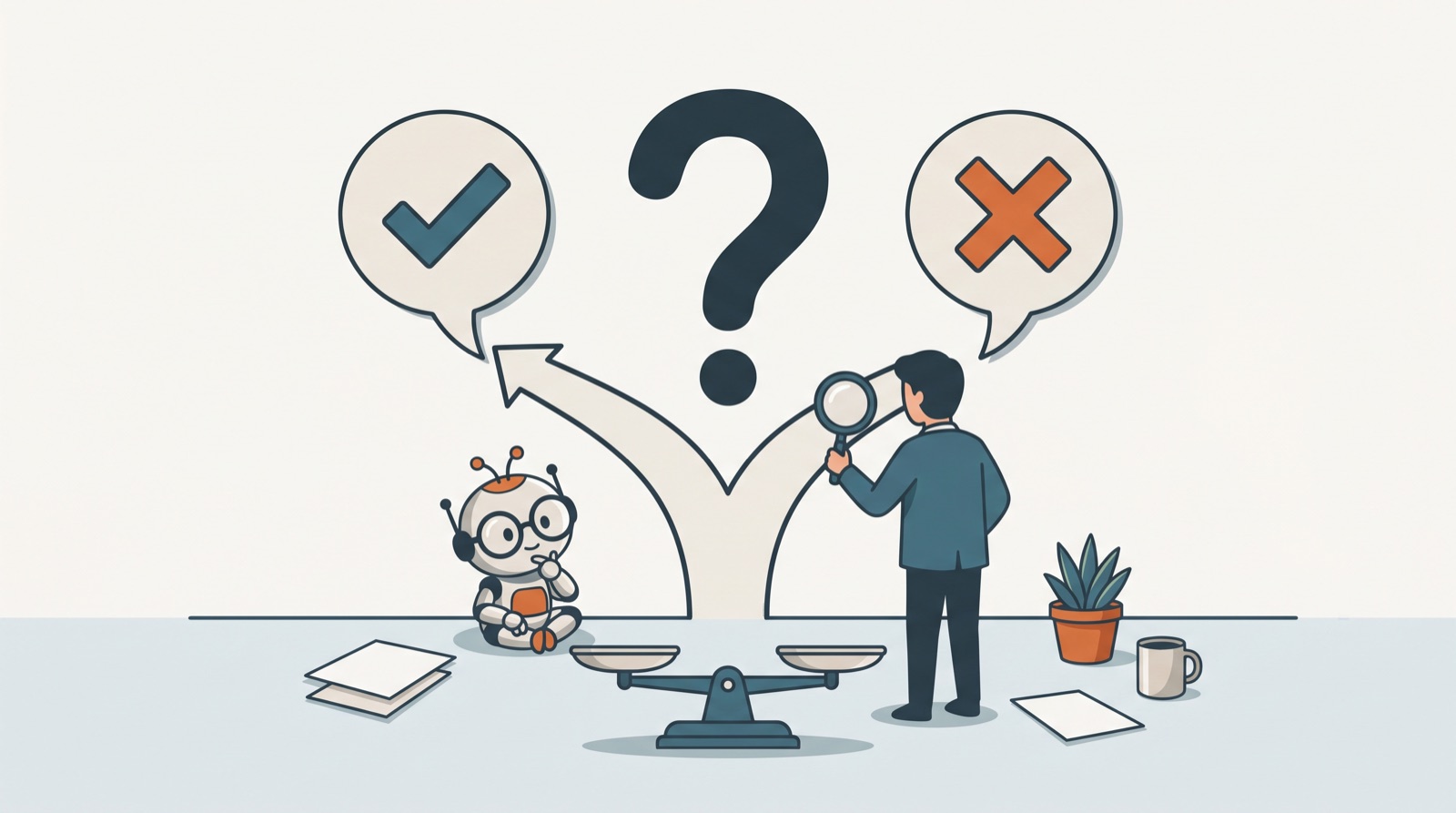
The AI is fast, and it doesn’t get tired of drafts. Deciding whether something sounds like me is still my job.
What stuck
- Generic is the real failure. A wrong fact gets caught. A draft that sounds like everyone slips through.
- Write the corrections down. A voice guide turns the same complaint, made over and over, into a rule you make once.
- Watch for invented detail. Fluent writing will fill gaps with a story that never happened.
- Describe the effect, not just the text. Tell it what you want the reader to feel or do.
If you’re writing with AI today
- Start a “never say this” list the first time a phrase makes you wince.
- Give it your raw words, not a polished brief. Your phrasing is the point.
- Edit by quoting the line, and ask for that line only.
- Read it out loud before you publish. If you wouldn’t say it, don’t post it.
Related: Amplify your voice with AI (2024) · 2025: When the prompt became the spec · Rebuilding this website with Claude Code
Back to AI Journey Chronicles